Sweet
Existence
Nathan Pyle’s Strange Planet had millions of fans and nothing you could put on a table. We changed that, inside Hasbro.
Sweet Existence is a party card game built on one of the internet’s most-loved creator IPs. I led the project creatively, working directly with Nathan Pyle to nail down the game mechanics, the styling, and the tone, then running a team of game designers, copywriters, and graphic designers to turn that into a product. I art directed the whole physical game: key art, the box, the cards, the components. The trick was taking a minimal, deadpan comic voice and making it feel native to a table and easy to spot on a mass-retail shelf. It’s the same motion any creator-led games company runs. A creator’s world, a licensor’s approval, a factory, and a buyer, and it has to feel like the creator made it.
Box, cards, and components.
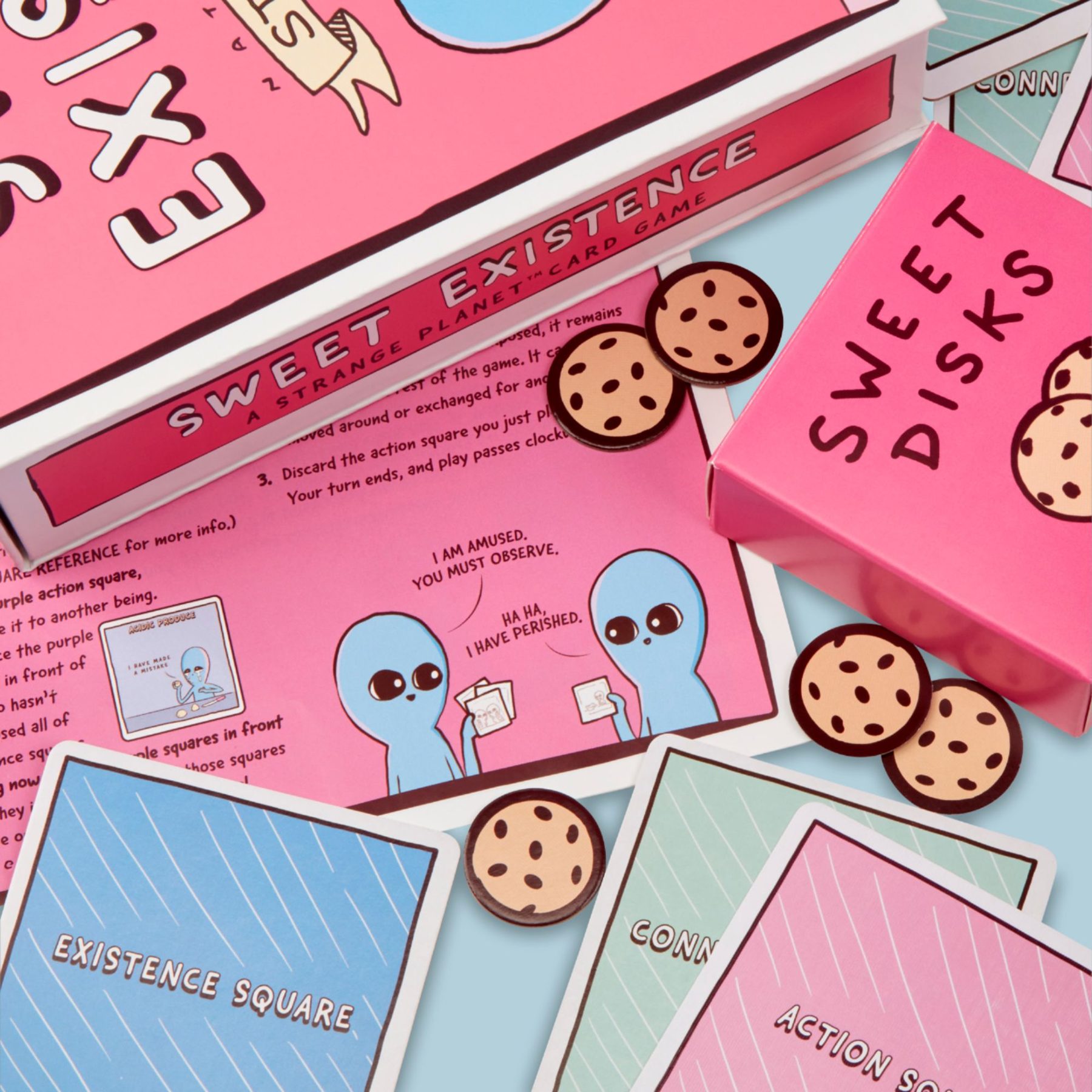
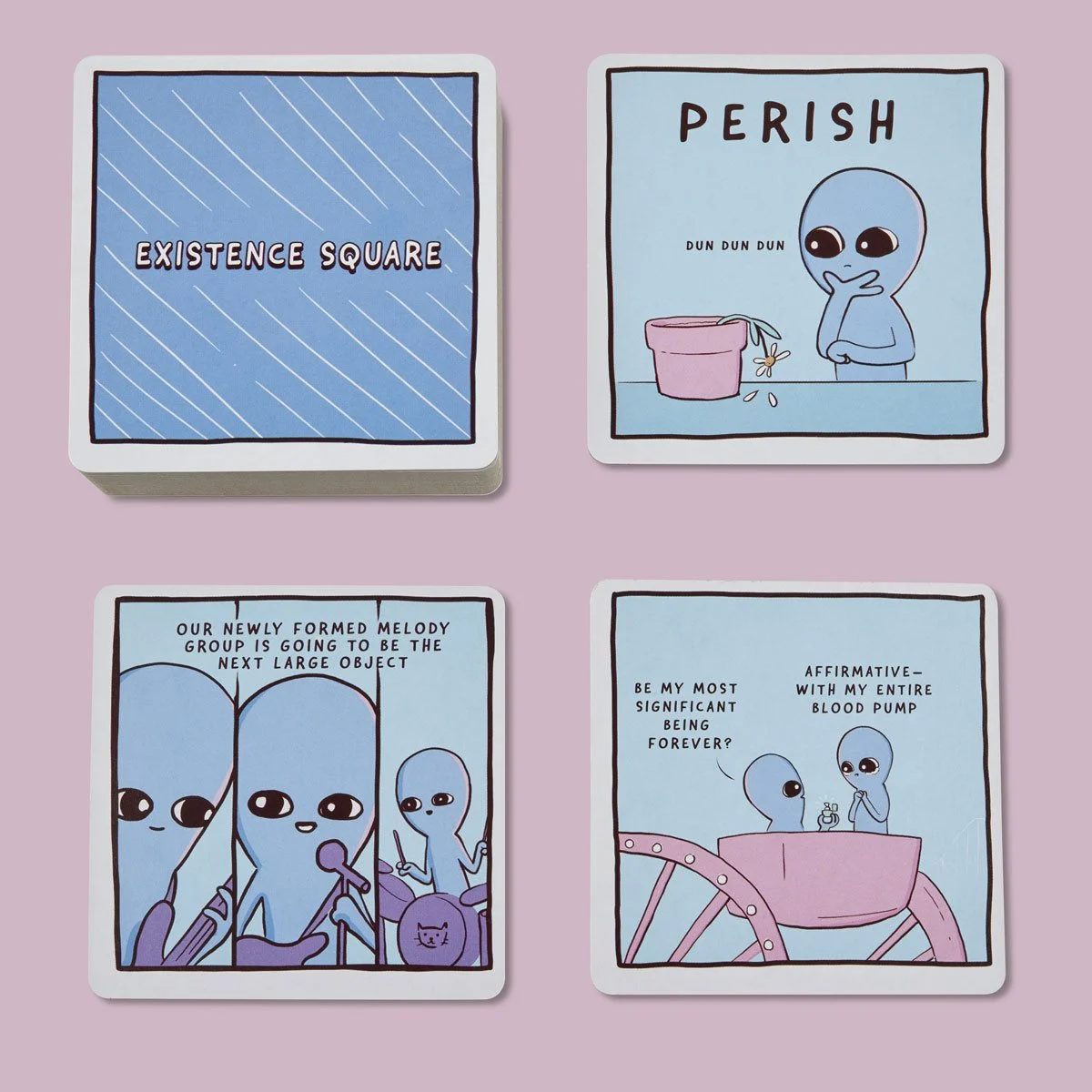
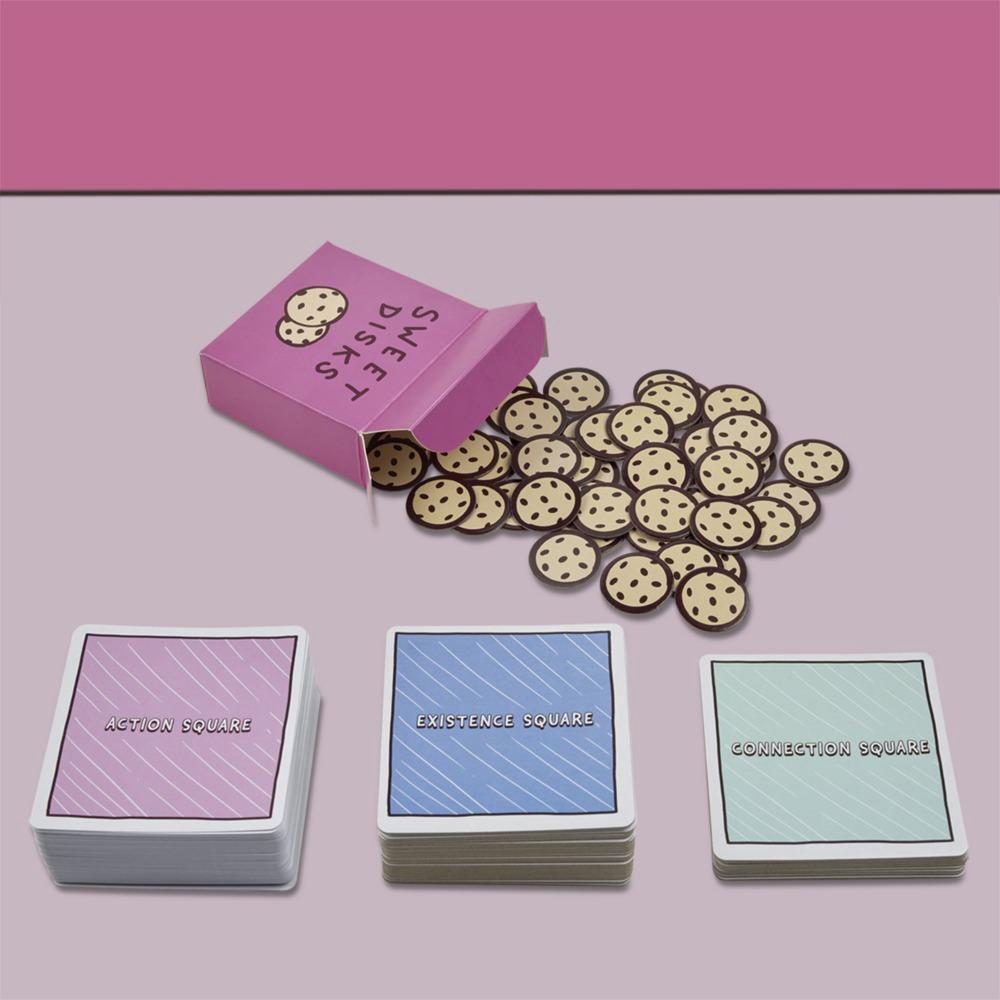
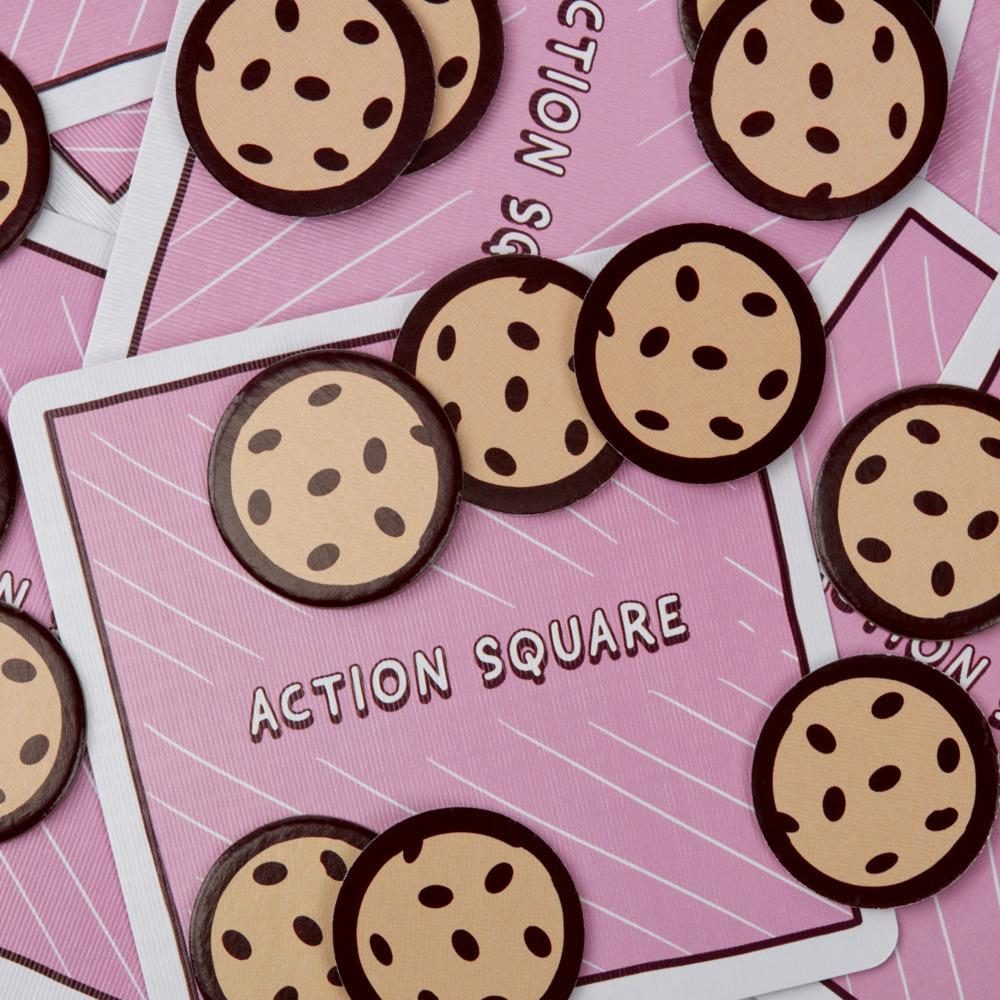
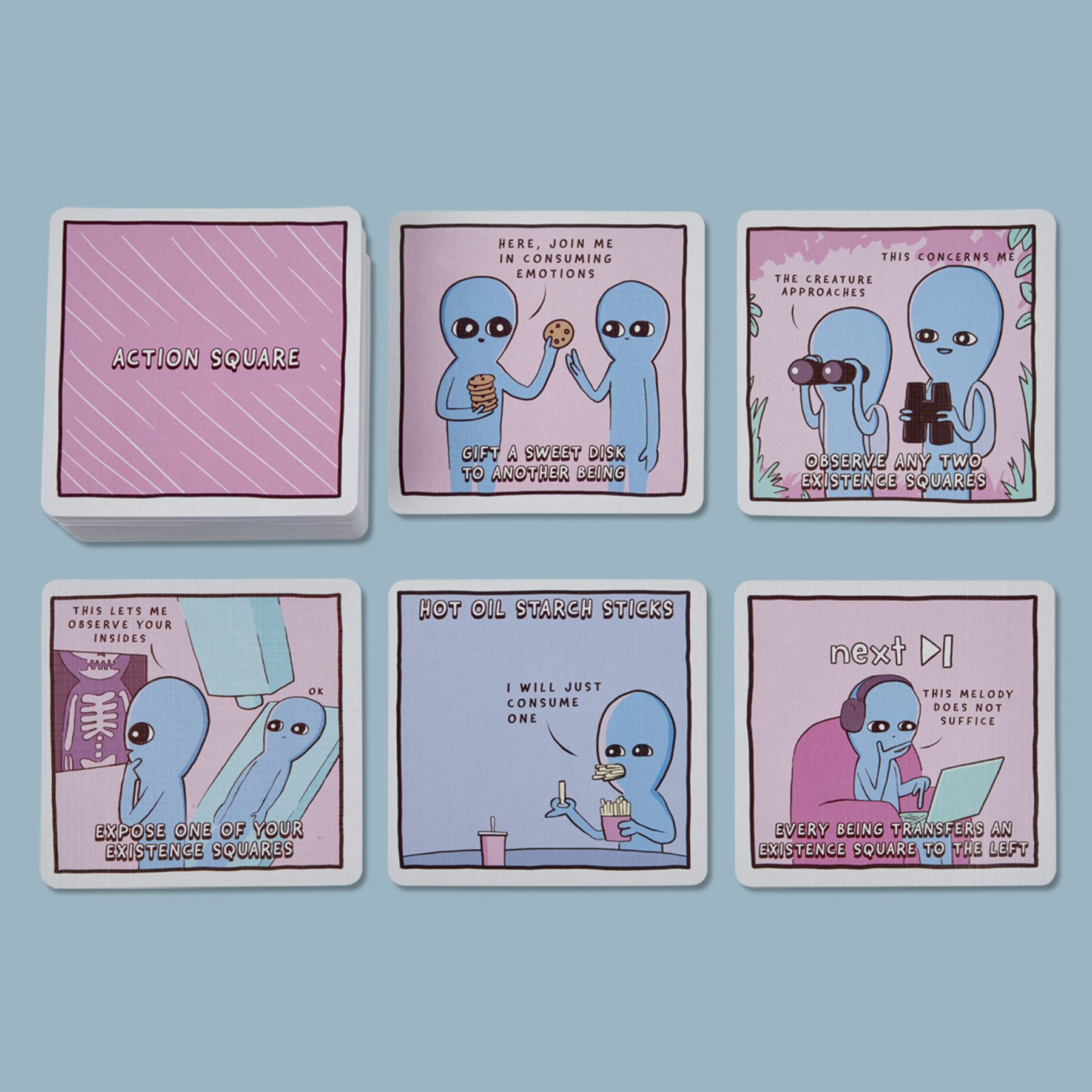
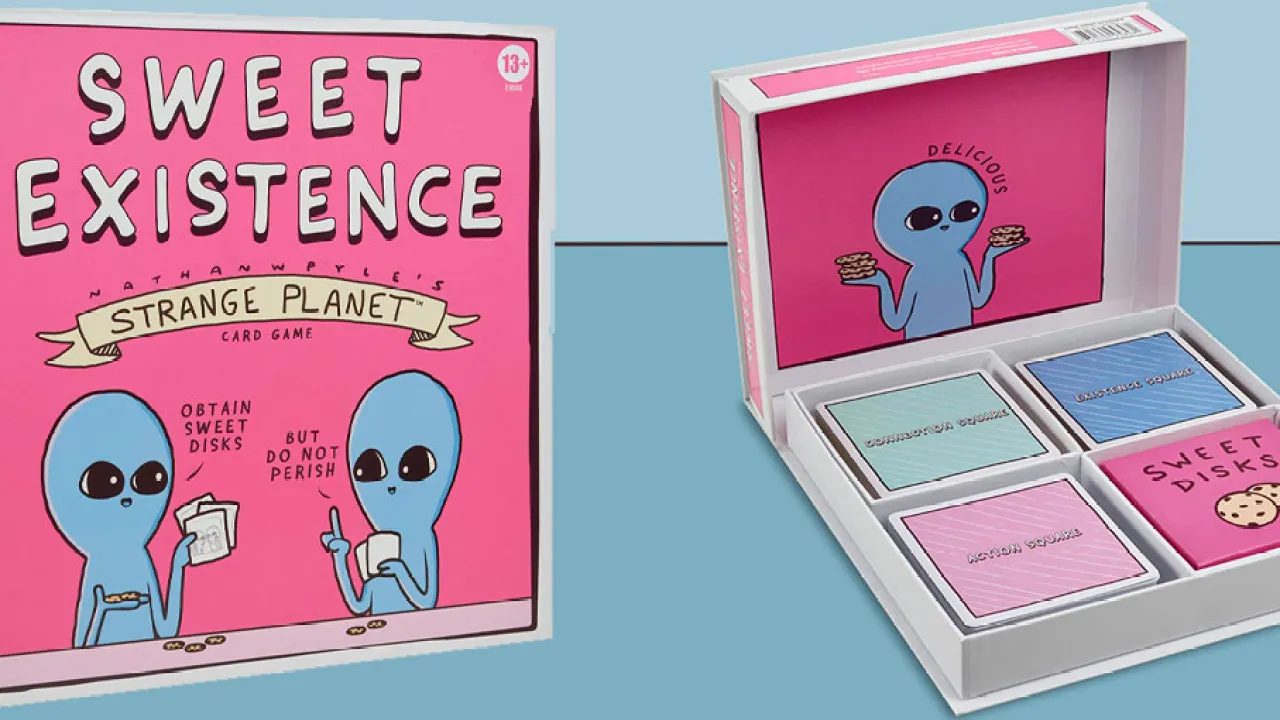
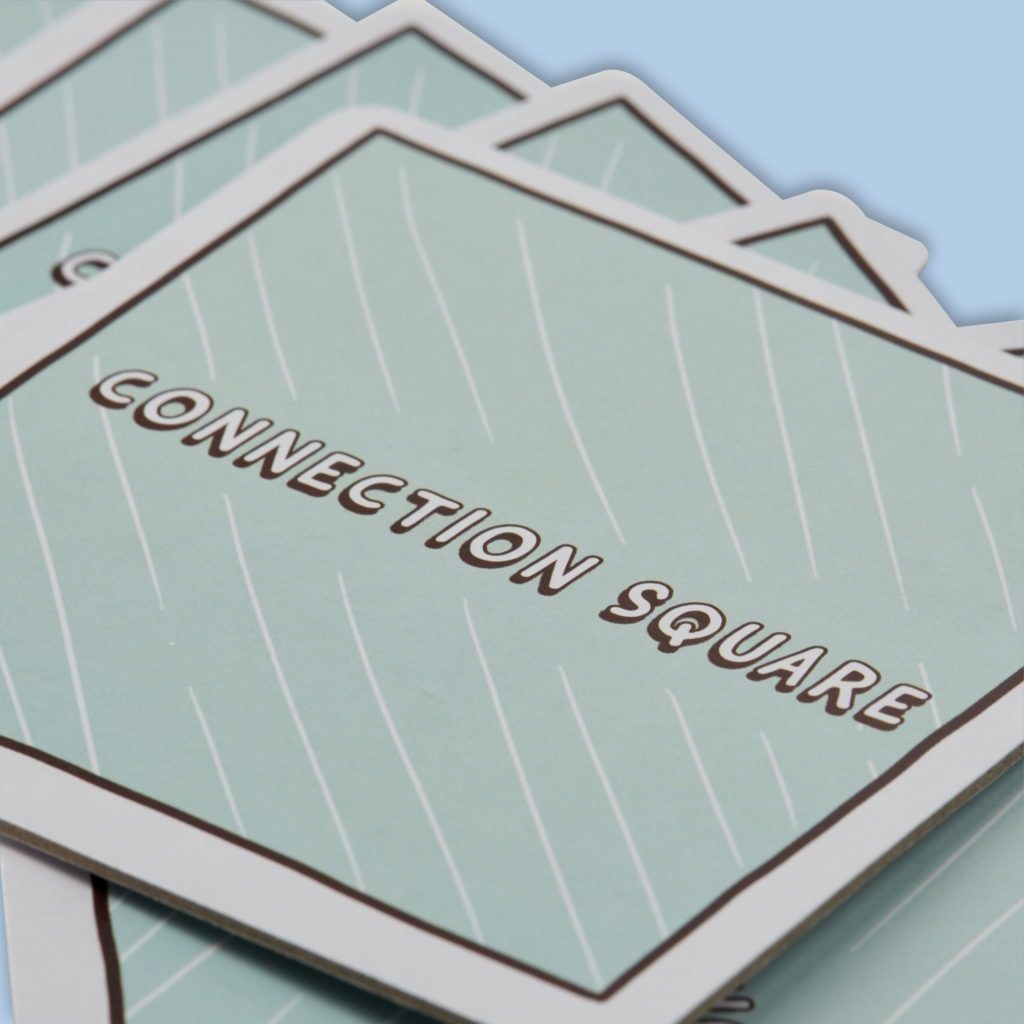
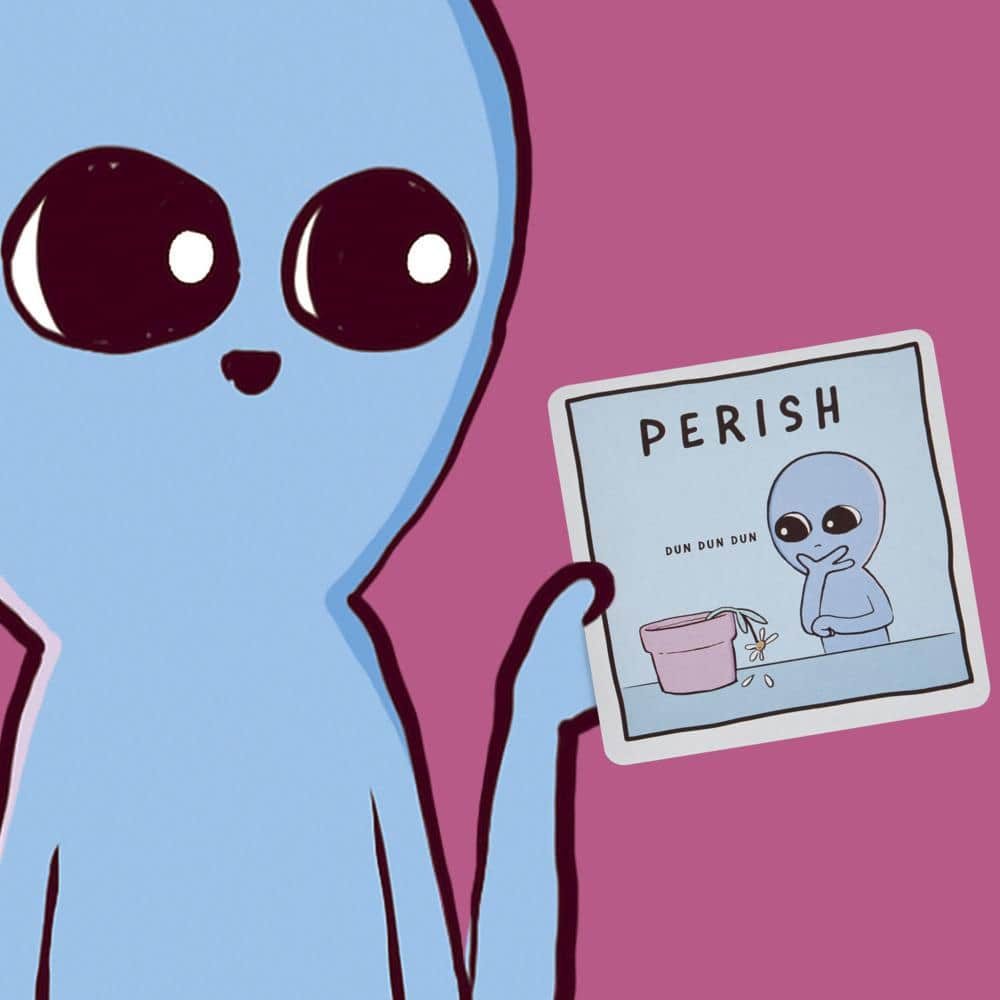
The shipped game: packaging, card types, and the cookie tokens that make the whole table laugh.
Don’t break the thing people love.
Strange Planet works because it’s restrained. Flat pastel color, round blue beings, and a deadpan, over-literal voice (“I am amused. You must observe.”). A card game needs hierarchy, iconography, legibility across dozens of cards, and a box that sells itself to someone who has never read the comic. Add a licensor who, rightly, protects every line, and a Hasbro pipeline with real cost, safety, and retail constraints.
The brief, in one line: make a game that feels like Nathan drew it, plays like Hasbro built it, and stops a stranger in the aisle.
Start with the IP, then build the system around it.
It started with Nathan. We worked directly together on what the game is: the mechanics, the styling, the tone of every line, so the rules would land like a Strange Planet strip and not like a licensed product wearing its clothes. From there I built a visual system out of the comic’s own rules (its palette, its line weight, its typography, its silence) that could carry a whole game without adding anything he wouldn’t recognize. Every card type got a clear job and a clear look. Every component became a joke you could hold: the “Sweet Disks” cookie tokens, the Existence Squares, the Action Squares.
Behind that was a team I led. Game designers iterating the play, copywriters holding the deadpan voice across dozens of cards, graphic designers building the card and packaging system. Then the part nobody sees on the shelf: approval rounds with Nathan, Hasbro brand and legal, and a production calendar that doesn’t care how good the art is. Protecting the voice while moving fast is most of the skill.
Minimal, warm, instantly “Strange Planet.”
Pink and sky-blue as the two poles of the box, the beings as the only characters, and the comic’s hand-lettered voice as the type system. Cards are pared back so the humor lands. The box is loud where it needs to be and quiet everywhere else. A licensed world, made to feel like it was always a physical game, with nothing bolted on.
Make it feel like the creator made it. Then make it survive the aisle.
Creator IP → card game → mass retail. Shipped.
A licensed party game with a built-in fandom, delivered through Hasbro’s approval and production machine with the voice that made the IP worth licensing still intact.
IP
This is the work I want more of. Take a world people already love, protect what makes it that world through a licensor and a corporation, and turn it into a thing worth putting on the table. Most of the craft is knowing what not to add.